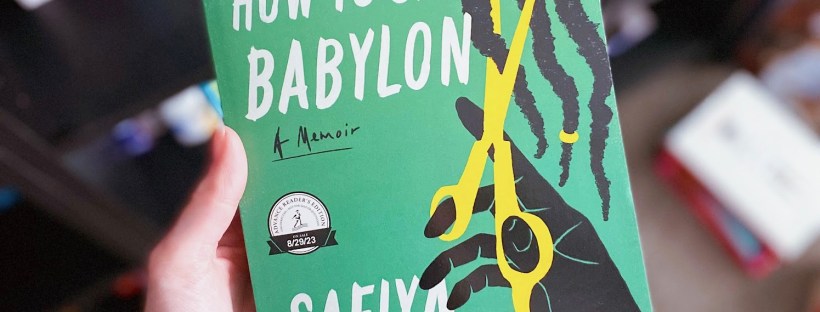
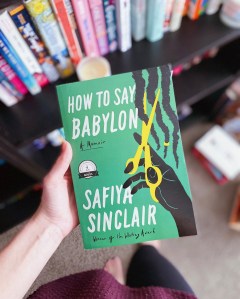
Publisher: Simon and Schuster Canada, October 3, 2023
Format: Paperback
Pages: 352
Rating: 5/5 stars
Summary (Goodreads):
With echoes of Educated and Born a Crime, How to Say Babylon is the stunning story of the author’s struggle to break free of her rigid Rastafarian upbringing, ruled by her father’s strict patriarchal views and repressive control of her childhood, to find her own voice as a woman and poet.
Throughout her childhood, Safiya Sinclair’s father, a volatile reggae musician and militant adherent to a strict sect of Rastafari, became obsessed with her purity, in particular, with the threat of what Rastas call Babylon, the immoral and corrupting influences of the Western world outside their home. He worried that womanhood would make Safiya and her sisters morally weak and impure, and believed a woman’s highest virtue was her obedience.
In an effort to keep Babylon outside the gate, he forbade almost everything. In place of pants, the women in her family were made to wear long skirts and dresses to cover their arms and legs, head wraps to cover their hair, no make-up, no jewelry, no opinions, no friends. Safiya’s mother, while loyal to her father, nonetheless gave Safiya and her siblings the gift of books, including poetry, to which Safiya latched on for dear life. And as Safiya watched her mother struggle voicelessly for years under housework and the rigidity of her father’s beliefs, she increasingly used her education as a sharp tool with which to find her voice and break free. Inevitably, with her rebellion comes clashes with her father, whose rage and paranoia explodes in increasing violence. As Safiya’s voice grows, lyrically and poetically, a collision course is set between them.
How to Say Babylon is Sinclair’s reckoning with the culture that initially nourished but ultimately sought to silence her; it is her reckoning with patriarchy and tradition, and the legacy of colonialism in Jamaica. Rich in lyricism and language only a poet could evoke, How to Say Babylon is both a universal story of a woman finding her own power and a unique glimpse into a rarefied world we may know how to name, Rastafari, but one we know little about.’
My Review:
Read if you like: memoirs
–
Sinclair details her life growing up in Jamaica under Rastafarianism and her oppressive father and abusive father. I fell like I learned a lot about Rastafarianism and I appreciated Sinclair discussing her tough upbringing. A very interesting memoir where Sinclair does an excellent job of writing a detailed book. I found it really interesting about how she became a writer and a poet and how hard she worked to get an education!
–
Thank you Simon and Schuster Canada for the copy of this book.

 Hooked to Books